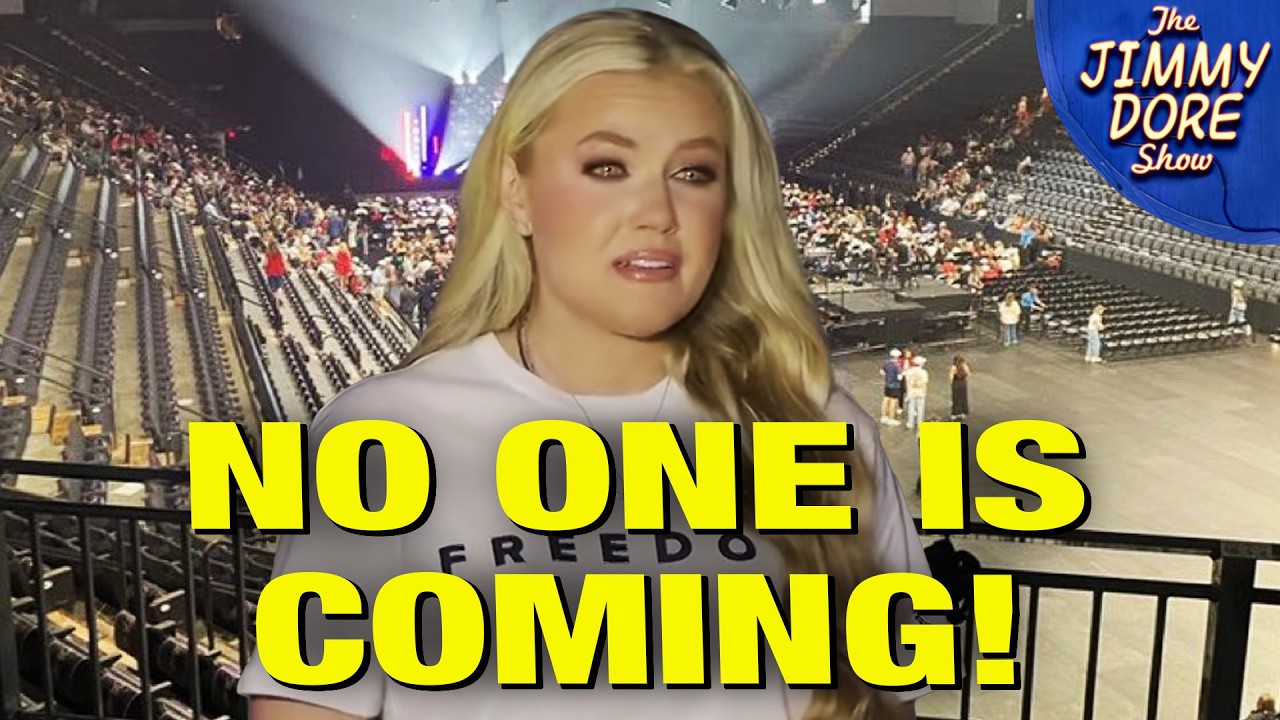
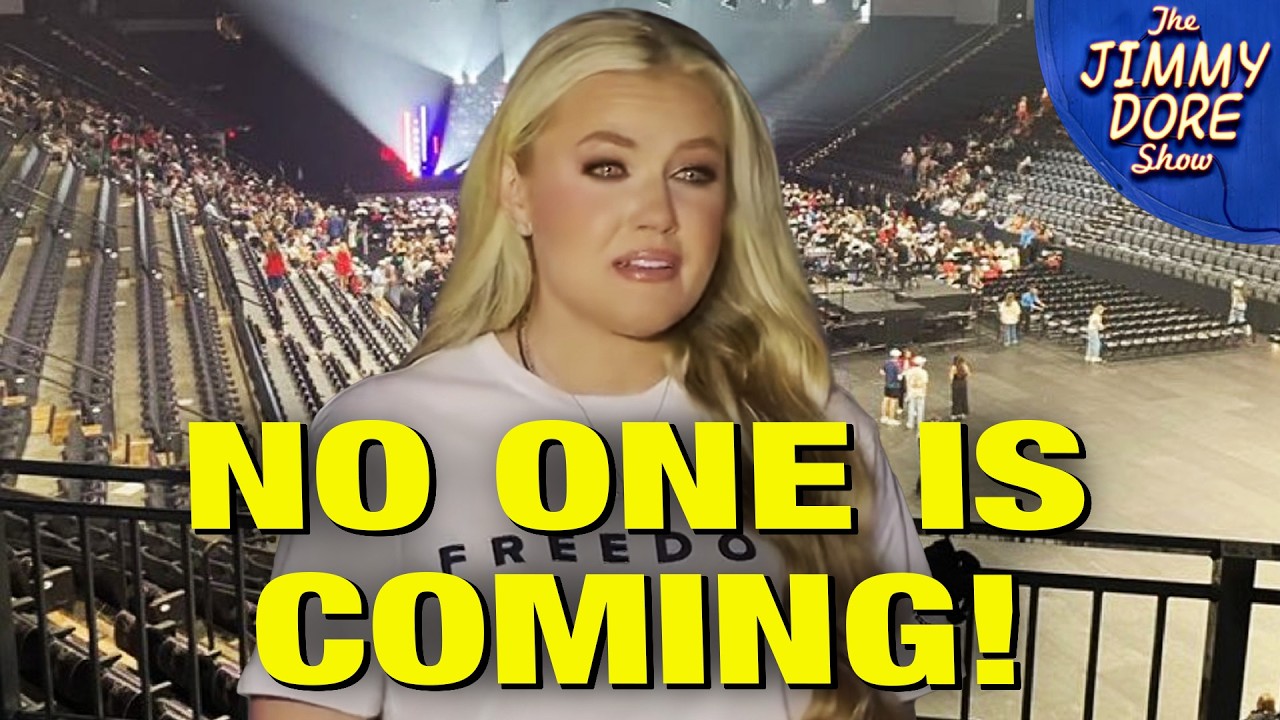
What was supposed to be a high-energy appearance quickly turned into an awkward and widely discussed moment after Erika Kirk failed to show up at a Turning Point USA (TPUSA) event—leaving behind a noticeably small and restless crowd.
The event had been promoted in advance as a key stop featuring Kirk, a figure known for stirring strong reactions online and drawing both loyal supporters and vocal critics. Expectations were set for a lively turnout, with organizers hoping her presence would energize attendees and spark meaningful conversations. Instead, what unfolded was something far different—and far more uncomfortable.
Attendees began gathering early, many anticipating a full program and a chance to hear Kirk speak in person. But as time passed, whispers began circulating through the venue. There was no official announcement at first, no clear explanation—just growing confusion. People checked their phones, looked toward the stage, and waited. And waited.
Eventually, it became apparent that Kirk would not be appearing at all.
The lack of communication only intensified the situation. For many in the audience, frustration quickly replaced anticipation. Some had traveled long distances, taken time off work, or rearranged their schedules specifically for this event. Without any immediate clarification, attendees were left feeling overlooked and, in some cases, misled.
What made matters more noticeable was the size of the crowd itself. Photos and clips from the venue began circulating online, showing rows of empty seats and a turnout that appeared far smaller than expected. Social media users were quick to comment, with some mocking the low attendance while others questioned whether the event had been overhyped from the beginning.
Critics pointed to the images as evidence of waning interest, suggesting that the gap between online popularity and real-world turnout might be wider than it seems. Supporters, on the other hand, pushed back, arguing that the absence of the main speaker likely impacted attendance and that the narrative being built online was unfair.
Still, the optics were difficult to ignore.
As clips spread, the conversation shifted from the event itself to broader questions about influence, expectations, and accountability. How much responsibility does a featured speaker carry when they fail to appear? And how should organizers handle last-minute changes to avoid leaving audiences in the dark?
In this case, the silence seemed to do more damage than the absence.
Eventually, brief statements began to emerge suggesting that unforeseen circumstances may have played a role in Kirk’s no-show. However, the lack of immediate transparency had already shaped public perception. By the time explanations surfaced, many had already formed their opinions—and shared them widely.
For Turning Point USA, an organization known for hosting high-profile speakers and drawing large student audiences, the incident raised concerns about event management and communication. While no event is immune to last-minute changes, the way those changes are handled can significantly impact credibility and trust.
Attendees who remained at the venue described an atmosphere that felt increasingly uncertain. Some stayed in hopes that Kirk might still arrive. Others left early, disappointed and frustrated. A few attempted to salvage the experience by engaging with other attendees or participating in whatever programming continued in her absence.
But the energy that had been promised never fully materialized.
Online, the situation took on a life of its own. Comment sections filled with speculation, criticism, and debate. Some users questioned whether the low turnout was the real story, while others focused on the no-show itself. The combination of both elements created a narrative that was hard to ignore—and even harder to control.
For public figures like Erika Kirk, moments like these can have lasting effects. In an era where perception spreads instantly and widely, a single missed appearance can quickly evolve into a larger conversation about reliability and authenticity.
At the same time, the reaction also highlights the increasingly complex relationship between online presence and real-world engagement. A strong digital following does not always guarantee packed venues, just as a single incident does not necessarily define a person’s influence. But when expectations are high, even small missteps can feel amplified.
As the dust settles, questions remain. Will Kirk address the situation directly? Will organizers adjust how they communicate changes in the future? And perhaps most importantly, how will audiences respond moving forward?
For those who attended, the experience was likely not what they had hoped for. For those watching from afar, it became yet another example of how quickly things can shift when expectations collide with reality.
In the end, the event may be remembered less for what was said—and more for what never happened.