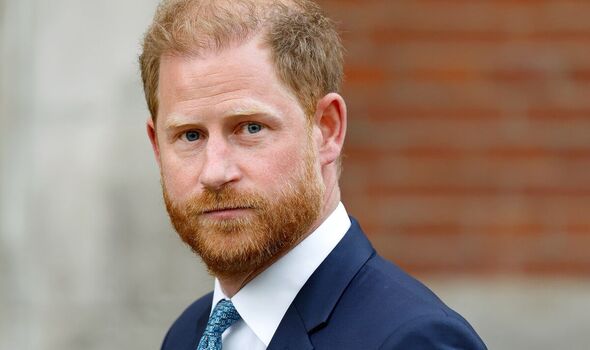
MELBOURNE, AUSTRALIA – It was the moment that redefined the Sussexes’ 2026 Australian tour. Standing on a stage at the Whitten Oval in Melbourne, surrounded by veterans and mental health advocates for the charity Movember, Prince Harry did something that shifted the atmosphere in the room from polite interest to absolute, pin-drop silence.
He didn’t just talk about mental health. He didn’t just talk about being a “new dad.” He looked at the audience and addressed the ghosts of his own upbringing, specifically referencing King Charles III and the late Princess Diana, to explain why he felt a desperate need to “cleanse” himself before raising his own son, Prince Archie.
While the world has grown accustomed to Harry’s candidness, the specific word he used to describe his children—and the “manual” he is trying to write for them—has sparked a global conversation about the legacy of royal parenting.

1. The “Disconnection” Confession
The speech began with an raw admission about the birth of his eldest son, Prince Archie. Harry spoke of a profound sense of “disconnection” in the early weeks of fatherhood—a feeling he attributed to the “unspoken challenges” men face when a partner is “the one creating life.”
“I felt a disconnection because my wife was the one creating life, and I was there to witness it,” Harry told the audience.
But the silence in the room truly deepened when he connected this feeling to his own past. He revealed that before Archie was even born, he felt he had to undergo intensive therapy to “cleanse” himself of the generational patterns he inherited. He admitted that the way he was raised—under the heavy weight of duty, public scrutiny, and a lack of emotional dialogue—left him ill-equipped for the kind of father he wanted to be.
2. “There Is No Pointing the Finger”
Despite the gravity of his words, Harry was careful to frame his reflection not as an attack, but as an evolution. He specifically named his father, King Charles, and his mother, Diana, while stating that there was “no blame” or “pointing the finger.”

What the Prince revealed on stage:
The “Room for Improvement”: Harry stated that even with “the best parenting in the world,” there is always room for improvement. He noted that Charles and Diana were parenting in a world without social media and modern emotional awareness—a world that simply didn’t allow for the conversations he is having now.
The Emotional Work: He confessed that he didn’t want to bring “the past” into his children’s lives. He spoke about the work required to ensure his “energy” didn’t negatively impact his son, noting that “kids pick up on your energy far more than you realize.”
3. The Word That Left the World Speechless: “The Upgrade”
The moment that has since gone viral involved Harry’s vision for the future of the Windsor bloodline. He chose a word that many found startling in its directness: “Upgrade.”
“I see parenting evolving over time,” Harry said. “Our kids are our upgrade. Not to say that I upgraded my dad or that my kids upgraded me, but the kids that we bring up in today’s world need to be an upgrade.”
The use of “upgrade”—a term usually reserved for technology—has left royal watchers divided. For supporters, it is a sign of his commitment to breaking the cycle of “generational trauma.” For critics, it is seen as a subtle jab at the parenting styles of the King and the late Princess, suggesting they were “versions” of parents that needed to be replaced.
4. A Nation and a Family Divided
The speech comes at a time of intense royal transition. With King Charles preparing for a historic State Visit to the United States later this month—a trip where he is not expected to meet with Harry—the Duke’s comments on parenting felt like a public olive branch wrapped in a firm boundary.
By admitting his “struggles” and his “disconnection” in the heart of Melbourne, Harry has positioned himself as a leader in the men’s mental health movement, but he has also widened the gap between the “old guard” of the Monarchy and his “modern” family life in California.
Conclusion: The End of the “Manual”
Prince Harry’s Australian tour has been defined by these moments of “unfiltered” truth. He ended his speech by urging other fathers to “stick their hands up” and ask for help before they reach a crisis point.
“There is no manual for this,” Harry concluded. “We are all figuring it out as we go. But I know that I want my children to live in a world where they don’t have to ‘cleanse’ themselves of me.”
The room remained silent as the Prince left the stage. The “Upgrade” has officially begun—but the cost of that transition is a conversation the Royal Family may not be ready to have.